

Being told you need a root canal can sound alarming, but modern endodontic care is focused on relieving pain, stopping infection, and preserving your natural tooth whenever possible. Root canal therapy is a common dental procedure that allows dentists to remove damaged tissue inside a tooth, clean and seal the area, and restore function so you can eat, speak, and smile comfortably.
At the practice of Smile Express Family Dentistry, our team combines up-to-date techniques with patient-focused comfort measures to make treatment straightforward and predictable. We’ll explain each step in plain language, manage discomfort effectively, and help you understand why root canal therapy is often the most prudent way to keep your natural tooth.
A tooth that has an infected or irreversibly damaged pulp is vulnerable to ongoing pain, spreading infection, and structural breakdown. In many cases, removing the diseased tissue while preserving the surrounding tooth structure is preferable to extraction. A successful root canal can maintain your bite, protect neighboring teeth from shifting, and retain chewing efficiency without the need for more extensive replacement options.
Contemporary root canal therapy uses refined instruments and biocompatible materials to clean and seal the internal portions of a tooth. With appropriate restoration — typically a crown or similar protective restoration — the treated tooth can remain a functional part of your mouth for many years. The goal is to resolve the immediate problem while setting the stage for a durable long-term outcome.
Because saving a natural tooth supports overall oral health and simplifies future care, many dental professionals recommend root canal treatment when the pulp is compromised but the tooth still has sufficient structure and bone support. We’ll review the condition of the tooth, discuss restoration options, and recommend a plan tailored to your needs.

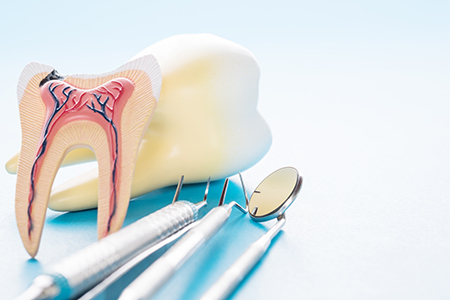
Teeth are more than enamel and dentin. At the center of each tooth is a soft tissue chamber that contains nerves, blood vessels, and connective tissue — collectively called the dental pulp. The pulp helps a tooth develop and gives sensory feedback, but it is vulnerable to bacteria and trauma once the protective outer layers are breached.
Deep decay, repeated dental procedures, or a significant blow to a tooth can allow bacteria to reach the pulp. Once infected or irreversibly inflamed, the pulp cannot heal on its own and can cause persistent pain, swelling, and eventually spread infection beyond the root tip if left untreated. Early diagnosis and intervention help limit damage to the tooth and surrounding bone.
Not all pulp problems cause dramatic symptoms at first; sometimes changes show up on X-rays before you notice discomfort. That is why routine dental examinations and timely attention to persistent symptoms are important for detecting issues while conservative treatment remains an option.
Although not every toothache means a root canal is required, watch for these warning signs and seek evaluation if they occur:
A lingering toothache that does not ease with over-the-counter remedies or that disrupts sleep can indicate pulp involvement. Pain that increases over time or comes on without an obvious trigger should prompt a dental visit for assessment.
If hot foods and drinks—or ice-cold items—produce sharp or prolonged pain, the pulp may be inflamed. Sensitivity that lingers after the source is removed is particularly suggestive of deeper problems.
Discomfort on chewing or pressure can mean the nerve and surrounding tissues are irritated or infected. Even a touch to the tooth that causes pain can signal the need for professional care.
A tooth that becomes grayish or darker than neighboring teeth may have suffered internal trauma or pulp necrosis. Discoloration is a visible clue that there may be irreversible internal changes.
A chip or fracture that reaches the interior of the tooth can expose the pulp to bacteria. Even when pain is minimal at first, structural damage raises the risk of infection and often warrants prompt evaluation.
Gum swelling or a pimple-like bump near a tooth suggests that infection may have spread beyond the root. In some cases an abscess drains on its own; in others the swelling can progress and require urgent care.
Advanced inflammation or infection can compromise the bone that supports a tooth, leading to mobility. Root canal therapy, combined with appropriate restorative and periodontal care, can often halt the process and encourage healing.

Delaying evaluation or treatment of a tooth with pulp involvement increases the likelihood of more extensive infection, pain, and damage to surrounding bone. Early attention gives you more options and typically allows for less invasive care. In many cases, treating an infected tooth early preserves more natural tooth structure and leads to a more predictable outcome.
Sometimes a problematic tooth causes few obvious symptoms and is first recognized on routine X-rays. Even when a tooth appears stable, radiographic signs of root-end changes or bone loss indicate that treatment should not be postponed. When a root canal is advised, we encourage timely scheduling to reduce the risk of complications.
Your overall health is also a consideration. Untreated dental infections can complicate other medical conditions and, in rare cases, spread beyond the oral cavity. By addressing concerns early, we help protect both your oral health and your general well-being.
Today’s root canal procedures are performed with attention to comfort and accuracy. Treatment generally begins with local anesthesia to numb the area so you feel little to no pain. Isolation with a rubber dam keeps the tooth clean and dry while the dentist works.
The diseased pulp tissue is removed, and the root canals are shaped and disinfected using specialized instruments and solutions. After the canals are thoroughly cleaned, they are filled with a stable, biocompatible material to seal them from reinfection. Depending on the tooth’s complexity and whether there is active infection, treatment may be completed in a single visit or staged over two or more appointments.
For patients who feel anxious about dental procedures, additional relaxation options are available. After root canal therapy, the tooth will typically require a permanent restoration — often a crown — to restore strength and function. Our clinicians will discuss the best restorative plan to protect your investment in saving the tooth.
After a root canal you may experience mild soreness as local anesthesia wears off and the surrounding tissues calm down. This discomfort is usually manageable with brief rest, over-the-counter pain relievers as recommended, and common-sense precautions like avoiding hard foods on the treated side until the final restoration is in place.
If your dentist prescribes antibiotics for an active infection, it is important to complete the full course. The treated tooth should be protected from excessive force while it waits for a permanent crown or other restoration; temporary materials do not offer the same fracture resistance as a finished crown. Maintaining normal brushing and flossing is essential to support healing and to protect neighboring teeth.
With proper care, a tooth that has undergone root canal therapy can remain functional for many years — often for the lifetime of the patient. If you notice increasing pain, swelling, or any unusual symptoms after treatment, contact our office for prompt attention so we can assess and address your concerns.
At Smile Express Family Dentistry, we prioritize clear communication, gentle technique, and personalized care plans so you can make informed choices about preserving your smile. If you have questions about root canal therapy or want to discuss whether it’s the right option for a particular tooth, please contact us for more information.
Root canal therapy is a dental procedure that removes infected or damaged soft tissue from inside a tooth while preserving the remaining structure. This treatment eliminates pain and infection by cleaning, shaping, and sealing the tooth's internal canals. When successful, it restores comfort and function so you can chew and speak without ongoing symptoms.
Root canal treatment is often recommended when the dental pulp is irreversibly inflamed or necrotic due to decay, trauma, or repeated procedures. It is a common and predictable option that helps avoid extraction and the need for more complex replacement treatments. At Smile Express Family Dentistry our team combines modern techniques and patient-focused comfort measures to make the process clear and manageable.
Common signs that a tooth may need root canal therapy include persistent or worsening toothache, heightened sensitivity to hot or cold that lingers after the stimulus is removed, and pain when biting or touching the tooth. You may also notice swelling, a pimple-like bump on the gum near the affected tooth, or a visible darkening of the tooth's color. In some cases a tooth becomes loose or causes referred pain to the jaw, ear, or head.
Not every symptom guarantees a root canal is necessary, and some pulp problems are detected only on X-rays before you feel discomfort. Because symptoms can vary, timely evaluation with clinical tests and imaging helps determine whether root canal therapy or another treatment is the best choice. If you experience persistent or unexplained dental symptoms, seek assessment promptly to limit damage and preserve options.
Diagnosis begins with a thorough clinical exam that includes visual inspection, percussion and bite tests, and evaluation of symptoms. Radiographs or three-dimensional imaging such as CBCT can reveal bone changes, the extent of decay, and root anatomy that influence treatment planning. Pulp sensitivity tests and assessment of restorability help the dentist decide whether the pulp can be saved.
Your medical history and overall oral health are also considered, since systemic conditions or periodontal disease can affect prognosis and sequencing of care. In some cases a period of observation or medication may be recommended before definitive treatment. The dentist will discuss findings and explain the rationale for root canal therapy or alternative options so you can make an informed decision.
Modern root canal procedures begin with local anesthesia to numb the tooth and surrounding tissues and isolation with a rubber dam to keep the area dry and free of saliva. The dentist then creates a small access opening, carefully removes the diseased pulp, and uses specialized instruments and irrigants to clean and shape the canals. Mechanical and chemical disinfection reduce bacterial load and prepare the canals for sealing.
After cleaning, the canals are filled with a stable, biocompatible material to seal them against reinfection, and a temporary or permanent filling is placed to close the access. Many teeth require a protective crown or onlay afterward to restore strength and function and to prevent fracture of the treated tooth. Depending on complexity and the presence of active infection, treatment is often completed in a single visit but may be staged across two appointments when necessary.
Local anesthesia and modern techniques make root canal therapy comfortable for most patients, so the procedure itself typically causes little to no pain. Dentists prioritize effective numbing and isolation to minimize sensations during treatment. If additional relaxation is needed, options such as oral sedatives or nitrous oxide may be discussed.
Mild soreness or tenderness can occur for a few days after the procedure as surrounding tissues heal, and this is usually managed with rest and over-the-counter pain relievers as directed. If your clinician prescribes antibiotics for an active infection, it is important to complete the full course as instructed. Contact the office promptly if you experience severe pain, swelling that worsens, or new symptoms after treatment.
After root canal therapy avoid chewing on the treated tooth until a permanent restoration is in place, and be cautious with very hard or sticky foods that could damage temporary fillings. Maintain normal brushing and flossing while being gentle around the area to support healing and protect neighboring teeth. Follow any specific instructions provided by your dentist regarding medications, oral rinses, or activity restrictions.
A follow-up visit is typically scheduled to confirm healing and to coordinate placement of the final restoration, often a crown, which protects the tooth and restores full function. Regular dental checkups and timely restorative care are essential to the long-term success of the treated tooth. Report increasing pain, swelling, or signs of reinfection so the team can evaluate and address issues quickly.
The primary alternative to root canal therapy is extraction of the affected tooth followed by a replacement option such as a dental implant, bridge, or removable prosthesis. Extraction may be recommended when a tooth has insufficient remaining structure, severe root fractures, or poor prognosis due to advanced periodontal disease. While extraction removes the source of infection, replacing the tooth can involve additional procedures and should be planned to preserve function and prevent shifting of adjacent teeth.
When feasible, preserving the natural tooth with root canal therapy is often preferable because it maintains the tooth's root and supports surrounding bone and occlusion. The dentist will review restorability, bone support, and your overall oral health to help determine whether root canal or extraction is the better long-term strategy. Patient preference and medical considerations also factor into the decision-making process.
As with any dental procedure, root canal therapy carries some risks, including the possibility of persistent infection, incomplete cleaning of complex canal systems, or postoperative discomfort. A treated tooth can also become more brittle over time and may be at higher risk for fracture without adequate restoration. Rarely, anatomical variations or procedural complications may necessitate retreatment or referral to a specialist endodontist.
Careful diagnosis, use of magnification and advanced imaging, sterile technique, and appropriate restorative planning help minimize these risks and improve outcomes. If retreatment is required, options may include retreatment of the root canal, surgical endodontic procedures, or extraction and replacement depending on the situation. Your dentist will explain potential complications and the steps taken to reduce them before treatment begins.
A tooth that receives thorough root canal treatment and an appropriate permanent restoration can remain functional for many years and often for the lifetime of the patient. Long-term success depends on factors such as the quality of the root canal fill, the strength of the final restoration, and the absence of recurrent decay or periodontal disease. Regular dental care and protective measures reduce the likelihood of future problems.
Teeth with extensive structural loss, severe bite forces, or chronic periodontal issues may have a less predictable prognosis and require additional restorative or periodontal care. Your clinician will discuss realistic expectations for longevity based on the tooth's condition and planned restoration. Maintaining routine exams and timely intervention for new concerns helps preserve the treated tooth over time.
Untreated dental infections can have consequences beyond the mouth, contributing to localized bone loss and, in some cases, exacerbating systemic conditions such as diabetes or cardiovascular disease through inflammatory pathways. Addressing an infected tooth removes a chronic source of inflammation and reduces the risk of spread to adjacent tissues or deeper structures. Timely dental care therefore plays a role in overall health maintenance.
At Smile Express Family Dentistry we evaluate each patient's oral and medical history and prioritize safe, evidence-based treatment to control infection and protect general health. Coordinating care with your medical providers is advised when you have significant health concerns or immune system issues that could affect healing. If you have systemic conditions, inform the dental team so they can tailor the treatment plan and follow-up accordingly.
Quick Links
